Project description
Complete: Umbagong bridges.
Umbagong District Park is surrounded by the suburbs of Latham, Holt, Higgins, Macgregor, Charnwood and Flynn. It provides over 50 hectares of open space for recreation.
The Park contains significant ecological values including matters of National Environmental Significance (protected under the Environment Protection and Biodiversity Conservation Act 1999) as well as under the Nature Conservation Act 2014. It also has heritage values protected under the Heritage Act 2004.
In 2021 a routine inspection of 3 of the timber footbridges in Umbagong District Park identified they were potentially unsafe due to deterioration in the timber components. The 3 bridges are located on the northern side of Ginninderra Creek within the Park and were constructed in 1986.
Bridges

Bridge 1194
Opened: July 2023

Bridge 1195
Opened: July 2023

Bridge 1193
Opened: August 2023
Frequently asked questions
What is this project delivering?
Three timber bridges in the Umbagong District Park have been replaced. See map for their locations.

Why do the bridges need replacing?
In 2021 a routine inspection of three of the timber footbridges in Umbagong District Park identified they were potentially unsafe due to deterioration in the timber components.
A structural engineer was engaged to further inspect the three bridges and it was found the beams of the bridges had reduced structural capacity due to the timber decay. The timber bridges had reached the end of their serviceable life and were beyond reasonable repair.
Why is the fourth timber bridge beneath Ginninderra Drive towards Flynn not included for replacement?
This bridge (bridge 1030) was last inspected in November 2021 and whilst being built around the same time and with the same material as the three bridges being replaced, has not been found to be in the same state of deterioration as the three identified and therefore remains fit for purpose. Repairs have been identified for the bridge deck and handrails and these are expected to be undertaken in the 2022-23 financial year, however full replacement is not required.
What studies have been undertaken so far?
The need to completely replace the bridges triggered the requirement to undertake heritage and ecological assessments to inform the most suitable design approach for construction. This work was completed in March 2022 ahead of design work commencing.
For further details of these studies and a summary of what they found see the Summary of Environmental Assessments (PDF). You can also read the heritage (PDF) and ecological reports (PDF).
What are likely the effects of the bridge construction on the lizards located near Bridge 1193?
Ecological advice was obtained for the project about the lizards and Bridge 1193 and this includes the below advice.
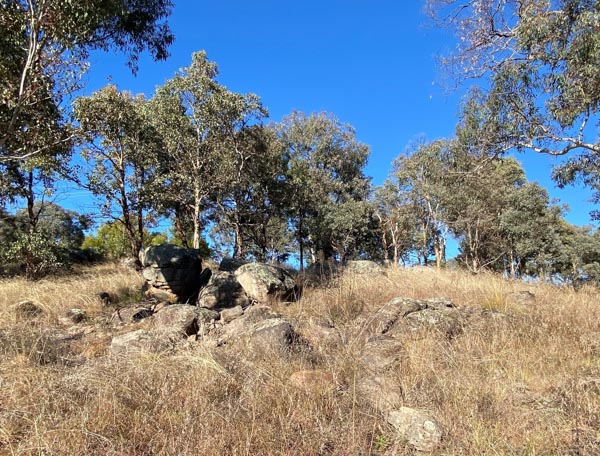
The Gippsland Water Dragon Intellagama leseurii howittii and Cunningham’s Skink Egernia cinninghami are known to occur in the location of Bridge 1193.
Both the Gippsland Water Dragon and the Cunningham’s Skink are common species in the ACT, and each has widespread distribution in south-eastern Australia. Neither species is of a conservation focus (i.e., threatened, near-threatened, rare), and both species are highly tolerant of human presence and adaptable to human interference/ disturbance. Public parks and gardens with water features, such as the Australian National Botanic Gardens, provide evidence of this for the Gippsland Water Dragon, with the species often becoming over-abundant.
These lizards that occur in the location of Bridge 1193 are expected to adapt rapidly to the human-induced disturbance that will result from the development. The Cunningham’s Skinks will likely move upslope away from the works area while the works are occurring, and the Gippsland Water Dragons, a species which is highly mobile within its habitat, may temporarily relocate to one of the other rocky outcrops along Ginninderra Creek. However, it is likely that both species will rapidly reoccupy the habitat at Bridge 1193.
From an ecological and biodiversity conservation perspective, the loss of rock ledges as basking habitat from the shade of the viewing platform does not have the potential to substantially impact the population of either species in Umbagong District Park. Neither will these reptiles likely be substantially adversely impacted by the additional footings and columns of the bridge designs.
In terms of suitable basking habitat, the shaded area of rock resulting from the viewing platform on Bridge 1193 constitutes about 4% of that available for the lizards in Umbagong District Park. Once construction is complete, the Gippsland Water Dragons and Cunningham’s Skinks will rapidly adapt and bask on other suitable basking habitat, where members of the public will be able to view the reptiles from the new bridge and associated viewing platform.
What design considerations were made?
A 'light touch' design approach has been chosen, similar to the Tidbinbilla ‘Sanctuary’ pedestrian bridges.

‘Light touch’ refers to a design that will enable a minimal disturbance footprint during construction, as well as referencing the visual impact of the structures in the landscape.
The designs have been developed with consideration to the constraints of the area including heritage and ecological as well as the surrounding visual landscape.
Will existing footings be reused on Bridge 1193?
For structural engineering reasons it is not possible to reuse the 35-year-old footings supporting the existing decaying timber bridge, which was constructed in 1986. The current structural capacities of the footings are unknown, and they are unlikely to meet current design and durability standards.
What handrail finishes have been considered?
Stainless steel, rusted finish, and painted handrails have been considered.
- Stainless steel handrails provide a comfortable and smooth feel, that generally stays clean and is easy to maintain.
- Handrails with a rusted finish have a more natural appearance and are often used in national parks. A downside of the rusted finish is that over time a fine orange-brown powder develops which brushes off on hands and on light-coloured clothing.
- Painted handrails provide a smooth finish. However, they are vulnerable to graffiti through scratching the paint surface. Regular repainting means high maintenance costs and graffitied handrails may remain unsightly for some time until repainting is next scheduled.
In response to early community feedback, the handrails progressed for this project are the rusted finish as opposed to the stainless steel handrails which were first shown in the artist impressions released for community engagement. The rusted finish handrails are capable of meeting accessibility standards. The rusted finishes will have a matte finish and are not known to pose any health and safety risks.
What materials have been used in the concept designs?
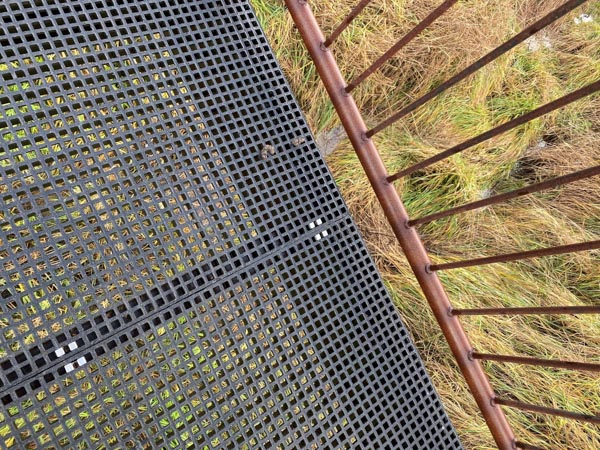
- Bridge platforms: fibre-reinforced plastic grating (FRP) similar to bridges/ walkways at Tidbinbilla Sanctuary and Jerrabomberra Wetlands.
- Bridge structures: mainly steel with a rusted finish and will follow the same alignment as existing timber bridges. The rusted look is intended to complement the natural setting and colours of Umbagong native grasslands.
- Handrails are of a rusted steel finish to complement to surrounding natural environment.
- The rocks used in the bridge abutments will be similar to those already on site, with a grey/brown toning.
Why is the balustrade for Bridge 1193 so tall?
The balustrade on Bridge 1193 is at 1.4 metres high as per Australian Standards AS5100 – Bridge Design. The terrain either side of this bridge includes rocky ground as well as a significant fall to the creek side. There is a high likelihood serious harm could be caused by the impact of a fall onto these surfaces, particularly to a cyclist travelling at higher speeds.
Furthermore, the balustrade panels are required to prevent climbing by children and to meet engineering design requirements for strength.
What will happen to the existing seating on bridge 1193?
The existing seating will likely remain in its current location. Following feedback from the community a look-out is being provided with seating and access for wheelchair users on bridge 1193 to enjoy the views.
How have safety/accessibility considerations influenced the viewing platform design?
Inclusive design and DDA considerations mean the size of the viewing platform needs to be sufficient for wheelchairs and mobility scooters to turn around, so the cycle carriageway can be entered forward-facing, to eliminate the safety / collision risks associated with reversing into the path of a potentially swift moving cyclist.
Bridge platform gradients are required to meet standards/ be inclusive for the use of mobility devices such as wheelchairs and scooters. The lookout location impacts the gradients that can be achieved across the length of Bridge 1193, and the current location enables the relevant accessibility standards to be achieved.
Will pedestrians and cyclists both be allowed to use the bridges?
Yes. The path network connecting bridges 1193, 1194 and 1195 will be for use by both pedestrians and cyclists. The concept designs for the bridges had a passing width of 1.8 metres to allow for sufficient width for two wheelchairs to pass as required in the Disability Discrimination Act 1992 and its associated standards.
Following feedback from the community, the bridges will be widened to two metres within the existing footprint without further encroaching onto any sensitive environmental areas. It is not intended to provide any physical treatments to encourage cyclists to slow down or dismount as this would be counterintuitive to ensuring access for wheelchair users and other mobility devices. However, signage requesting cyclists to adopt slower speeds on the bridges is being considered.
What approvals does this project need to go through prior to construction commencing?
Following the detailed design phase a development application (DA) for the proposed works was prepared and assessed in the merit track. The site is located in the PRZ1 Urban Open Space zone and the development application assessed the proposal against the objectives and requirements of the Parks and Recreation Zone Development Code and other general codes in the Territory Plan.
Along with the design plans, the DA documents included plans to demonstrate how the works will be managed to avoid impacts, such as the tree and landscape protection measures and erosion and sediment controls that will be implemented.
The DA was approved conditionally on 20 September 2022. You can read the Notice of Decision.
Reports
- Structural engineering report (PDF 2.6 MB)
- Heritage report (PDF 8.9 MB)
- Ecological report (PDF 38.8 MB)
- Heritage/ecological reports - a summary (PDF 163.9 KB)
- What we heard report (PDF 420.2 KB)
Contact us
If you have any questions or would like to be added to the email list for updates, you can email the project team.