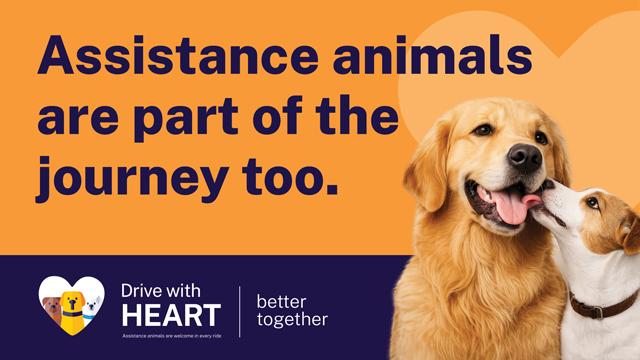
Assistance animals play a vital role in supporting people with disability and medical conditions to live independently, access services and participate in everyday activities. Ensuring they can travel safely and without discrimination is an important part of creating an inclusive community.
Assistance animals have the legal right to travel with their handlers in taxis, rideshare vehicles and other transport services.
Assistance animals are used to help their handlers navigate daily life, access essential services and travel independently. They provide important support that enables many people to participate fully in the community.
Under Commonwealth Disability Discrimination law, assistance animals can accompany their handlers in places that are ordinarily open to the public.
This includes:
- public transport
- taxis
- rideshare vehicles
- cafes and restaurants
- shopping centres
- hotels
- hospitals
- entertainment venues.
Taxi and rideshare drivers and transport providers are required to transport assistance animals with their handlers. Refusing a passenger because they are travelling with an assistance animal is unlawful and may result in enforcement action.
It is also an offence under ACT law to falsely represent an animal as an assistance animal. However, concerns about whether an animal qualifies as an assistance animal must be based on evidence that the animal does not meet the required standards of behaviour, training or hygiene. A person must not refuse access based on assumptions, stereotypes, or a belief that dogs are inherently unclean, unsafe or unsuitable.
People who believe they have been refused access because of an assistance animal can lodge a complaint with Access Canberra by:
Evidence to support and assist an investigation is helpful to the complaint process. Useful evidence may include:
- the name, identification number or vehicle registration of the person refusing access
- name(s) and contact details of witnesses to the access refusal
- refusal or service cancellation notices
- recordings or copies of conversations with the person refusing access.
Refusing a person service because they have an assistance animal can be the basis for a complaint under the ACT Discrimination Act 1991. You can contact the ACT Human Rights Commission by:
If there is an immediate risk to your safety as a result of an access refusal, contact ACT Policing on 000.