The ACT Government is removing 43 ageing and high‑risk trees in Lennox Gardens, including Canberra Nara Peace Park, in August 2026 to improve community safety.
The work is expected to take 5 days to complete (weather dependent). The park will remain open during the tree removal works. There will be some minor detours in place for pedestrians and cyclists.
Replacement trees will be planted in spring 2026 to deliver a safer, better designed and more sustainable landscape for future visitors to enjoy. Replanting in Canberra Nara Peace Park will follow a Japanese garden style and will be delivered in partnership with the Friends of Nara Park.
All the wood collected from the tree removals will be reused as timber or mulch for government and community projects. Reusing harvested wood supports sustainable resource use by diverting material from waste streams and maximising the ongoing community and environmental value of removed trees.
Contact
Call Access Canberra on 13 22 81 and ask to speak to the Urban Treescapes team.
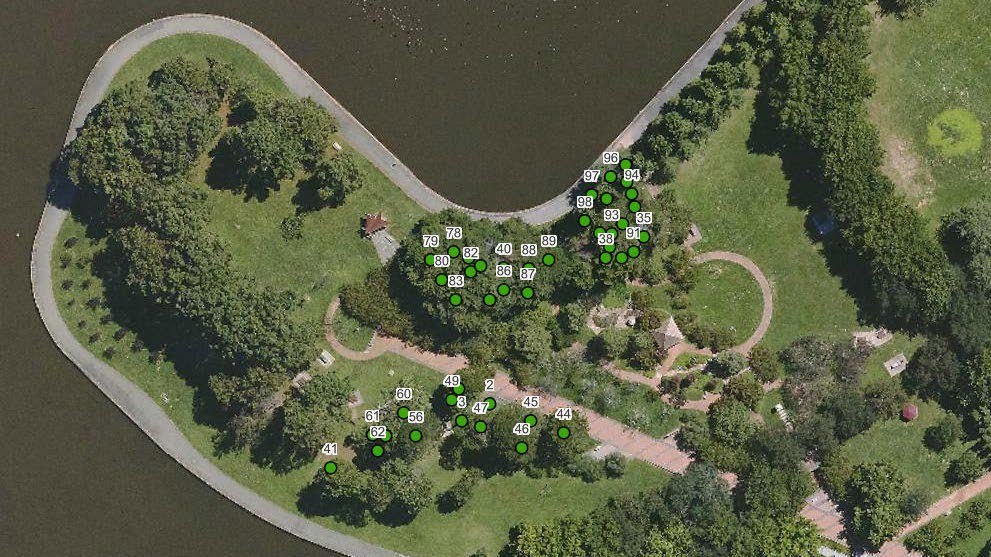
Map of planned tree removal at Lennox Gardens. Click on the image to view full screen.
Frequently asked questions
Where is Lennox Gardens
Lennox Gardens District Park is located between the Hyatt Hotel Canberra and Lake Burley Griffin. It’s home to Canberra Nara Peace Park and Canberra Beijing Garden.
Why are so many trees being removed at once?
The trees identified for removal are in poor condition, including being over‑mature, structurally compromised, or dead and dying. In Canberra Nara Peace Park, many of the trees also rely on each other for stability as part of a windbreak, meaning they need to be removed together to avoid creating new safety risks.
How were trees assessed for removal?
The trees were assessed by qualified arborists, who evaluated their structure, health and risk. Removal decisions were based on these expert assessments.
Are the trees unsafe?
Several trees have experienced branch failures and arborist assessments indicate further failures are likely if no action is taken. Removing these trees now is a proactive step to reduce the risk to visitors.
Why can’t the trees just be pruned?
Pruning cannot resolve the underlying structural defects without removing most of the canopy. This would significantly reduce the trees’ health, lifespan and amenity value, and would not adequately address the safety risks.
What trees are being removed?
The 29 trees to be removed from Canberra Nara Peace Park include:
- 20 over-mature Monterey cypress (Cupressus macrocarpa)
- 6 Himalayan cedar (Cedrus deodara)
- 3 Black poplar (Populus nigra) (along the foreshore)
The 14 trees to be removed from the peninsula section include:
- 9 Radiata pine (Pinus radiata)
- 1 Patula pine (Pinus patula)
- 4 Canary Island pine (Pinus canariensis)
Will the trees be replaced?
Yes. All removed trees will be replaced with better suited tree species as part of Canberra’s urban forest renewal program. The new plantings will create a healthier, more resilient and diverse canopy.
What trees will be planted?
In Canberra Nara Peace Park, replanting will reflect a Japanese garden style and will predominantly feature Japanese black pine. The peninsula area will be replanted with a mix of conifer species including Bald cypress (Taxodium distichum), Patula pine (Pinus patula), Canary Island pine (Pinus canariensis), and Stone pine (Pinus pinea) to improve diversity and resilience. Final species selection may vary depending on availability.
Will there be a loss of shade?
There will be a temporary reduction in shade while the new trees establish. Over time, the new plantings will grow to provide shade and contribute to a healthier, more sustainable tree canopy.
How long will it take for new trees to grow?
New trees will begin establishing immediately after planting, but it will take several years for them to mature and provide full canopy cover. Species have been selected to ensure long‑term benefits.
Will the park remain open during works?
Yes. Lennox Gardens will remain open, but there will be temporary access restrictions in some areas while works are underway to ensure public safety.
How will access be managed?
Minor pedestrian and cyclist detours will be in place during tree removals. Visitors may be asked to use alternative routes or wait briefly when works are occurring nearby. Cyclists are encouraged to use the pathway adjacent to Flynn Drive to bypass the worksite.
What will happen to the removed trees?
Where suitable, timber will be salvaged and repurposed as part of the ACT Government’s wood reuse initiative, supporting sustainable resource use and reducing waste.